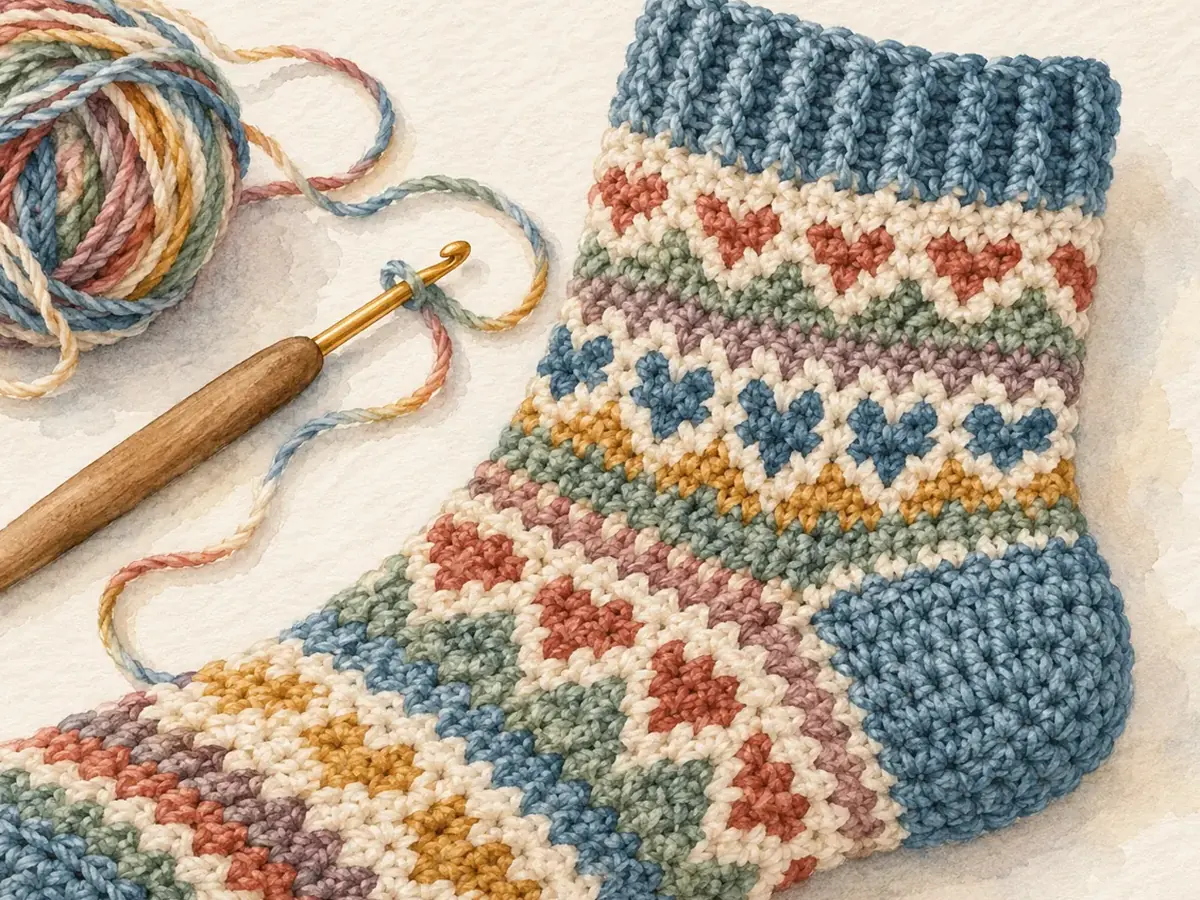
Choose the yarn and hook together. A hook that works well for a soft scarf may make a loose, hole-filled fabric in a small stuffed character. Begin with the project instructions, then check the fabric you actually produce.
The reference guide introduces fibre types, hook sizes and yarn handling. Here is a practical way to turn that information into a small, useful starter kit.
In this guide
Read the yarn label before choosing a colour / Compare hooks in millimetres / Make a swatch before committing / Hold the yarn so it can move / Keep the first kit small
Read the yarn label before choosing a colour
Look for fibre content, yarn thickness, suggested hook size and care instructions. Cotton, wool and synthetic fibres can behave differently even when they are sold in a similar thickness. A change of fibre can alter the drape, stretch and appearance of the finished piece.
For practice, choose a smooth yarn in a colour that lets you see the top of each stitch. Strongly textured or very fluffy yarn can hide the loops you need to find. You can explore those effects after learning to recognise the stitch structure.
“Ply” can describe how strands are combined, but it does not give a dependable thickness comparison across every yarn system. Two eight-ply products, or two Chinese yarns described with the same strand count, need not behave identically.
Compare hooks in millimetres
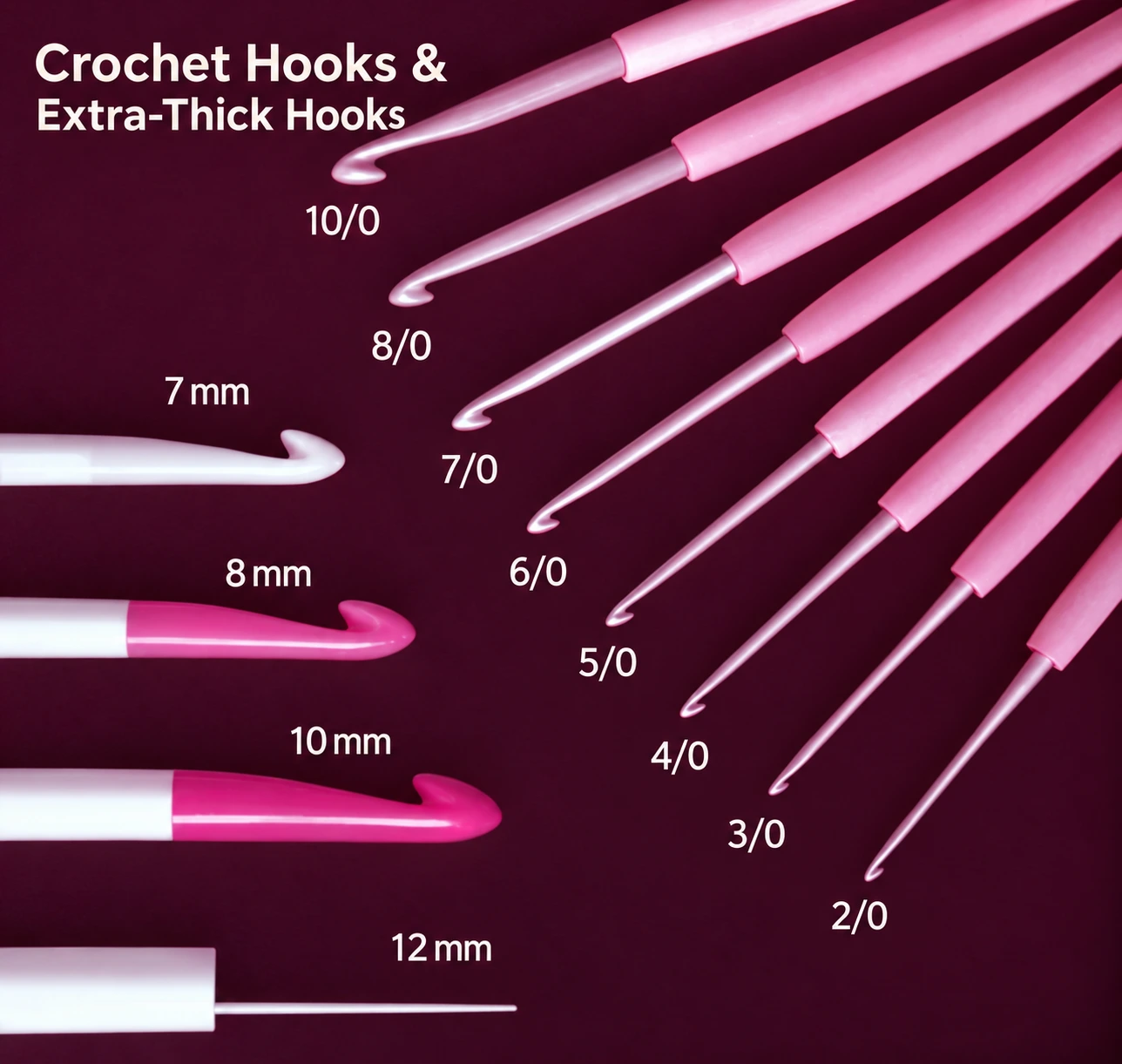
The supplied book uses Japanese hook numbers alongside metric diameters. US letters and steel-hook numbers use other systems. When substituting a hook, compare the marked millimetre size rather than matching the number alone.
| Check | Why it matters |
|---|---|
| Metric diameter | A direct size reference across differently labelled hooks |
| Yarn recommendation | A starting point for a suitable fabric |
| Pattern gauge | The measurement the finished project depends on |
| Handle and grip | Whether you can move the hook comfortably |
A smaller hook usually gives a denser fabric with the same yarn and technique; a larger hook usually gives a more open fabric. Your own tension also affects the result. For stuffed work, inspect whether filling shows through rather than choosing the smallest hook you can force through the stitches.
Make a swatch before committing
- Use the yarn, hook and stitch intended for the project.
- Make a sample larger than the area you need to measure.
- Let the fabric relax and follow the pattern’s washing or blocking directions where relevant.
- Count stitches and rows across the specified distance, away from the edges.
- Compare with the pattern, adjust and test again if size matters.
If you have too many stitches across the measured width, try a larger hook. If you have too few, try a smaller one. Recheck the resulting texture as well as the number.
Hold the yarn so it can move
The reference shows yarn passing through the fingers of the non-hook hand, with the working fabric held near the active stitch. The purpose is a steady supply of yarn, not a rigid hand position.
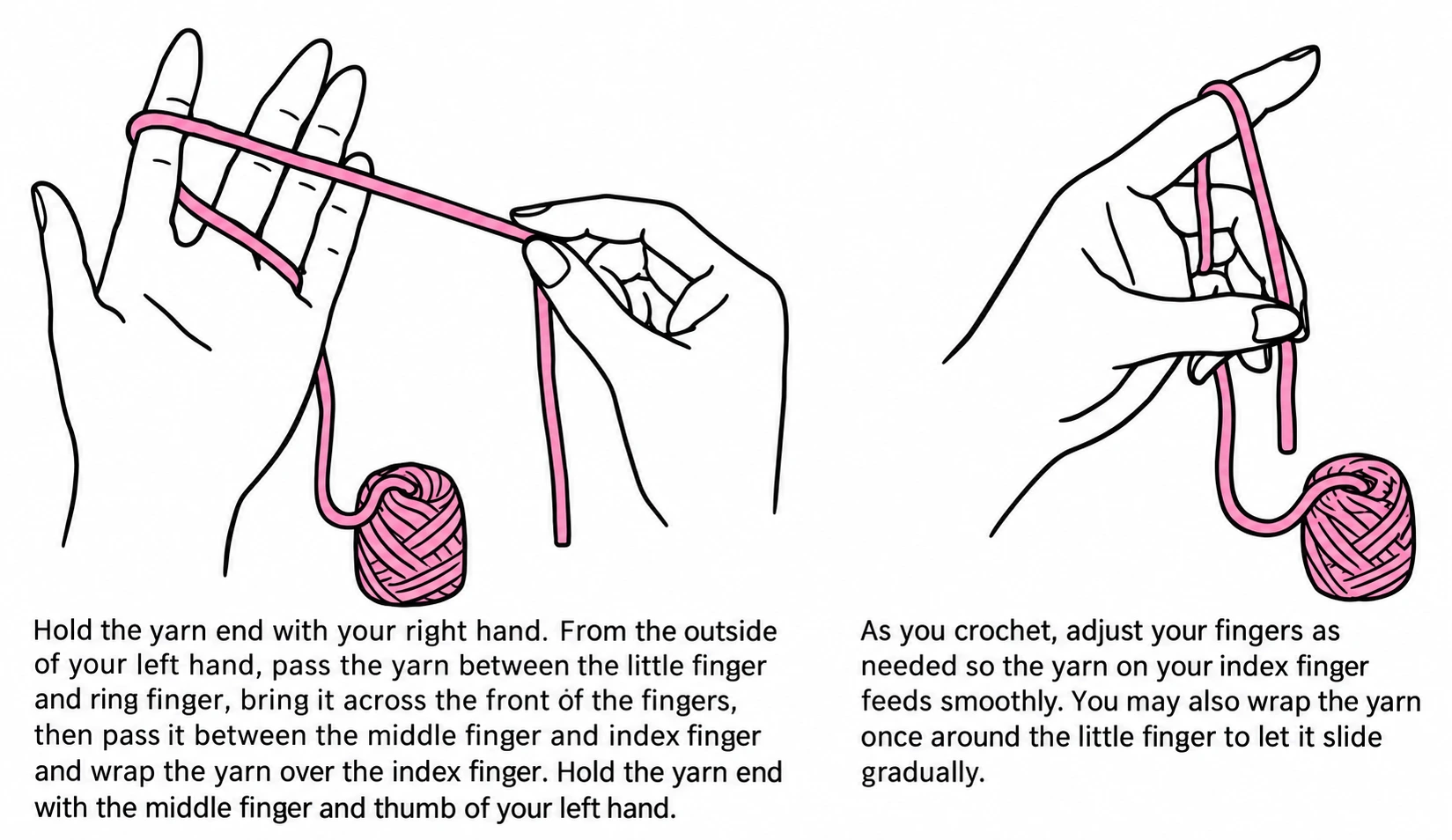
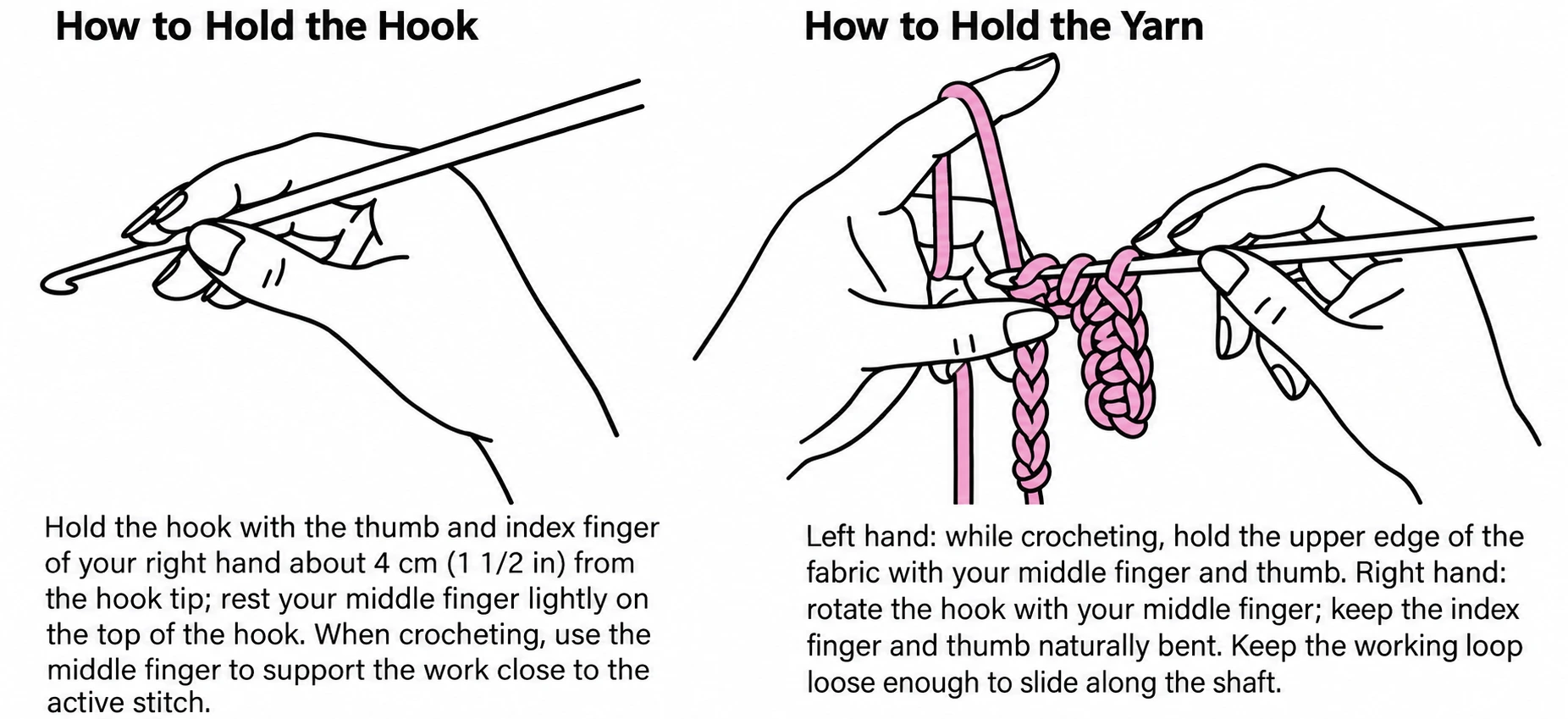
Keep the loop on the shaft loose enough to slide. If each stitch becomes a struggle, relax your grip and check that you are not tightening the working yarn after every movement. Choose a comfortable hook hold and move your supporting fingers along the fabric as it grows.
Keep the first kit small
- The yarn and hook specified for one chosen project.
- A stitch marker to identify the start of a round.
- A blunt tapestry needle for weaving in tails.
- Scissors and a tape measure.
- Suitable filling only if the project requires it.
A yarn-label hook recommendation is a starting point. The pattern’s gauge and the fabric you need make the final decision.
Reference notes
Adapted from the yarn, hook and handling sections of the supplied I Want to Learn Crochet (Chinese-language reference). The Craft Yarn Council yarn-weight guide also treats its hook ranges as guidelines rather than a substitute for pattern gauge.
Step illustrations and photographs are excerpts from the supplied reference materials credited below. In-image instructional text has been translated into English and the supplied images enhanced with AI assistance. The English captions explain the pictured actions. Select a step image to view it at full size.