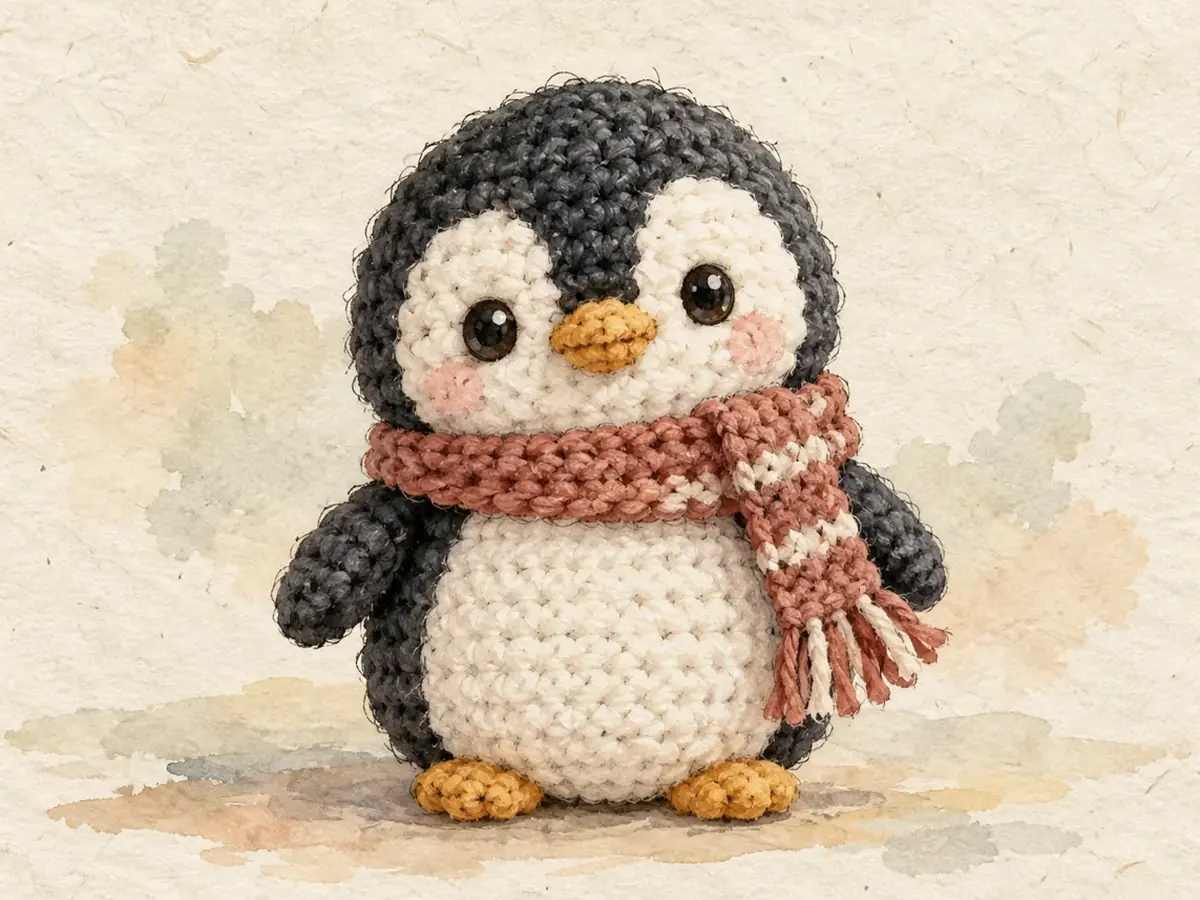
Chain, slip stitch, single crochet, half double crochet, double crochet and treble crochet form a useful foundation for flowers, small decorations and amigurumi. Learn their movements on a small practice piece before following a shaped project.
This guide uses US names. You will also see the Chinese reference letters CH, SL, X, T, F and E. The loop already sitting on your hook is the working loop; it is not an extra completed stitch.
In this guide
Prepare your practice yarn / 01. Chain — ch / CH / 02. Slip stitch — sl st / SL / 03. Single crochet — sc / X / 04. Half double crochet — hdc / T / 05. Double crochet — dc / F / 06. Treble crochet — tr / E / Compare the movements / A small exercise
Prepare your practice yarn
Use smooth yarn, a matching hook and a stitch marker. Make a slip knot that can slide along the hook shaft. Hold the yarn gently enough to draw it through a loop without forcing the hook.
01. Chain — ch / CH
Catch the working yarn with the hook and draw it through the loop already on the hook. That makes one chain. Repeat to build a flexible foundation.
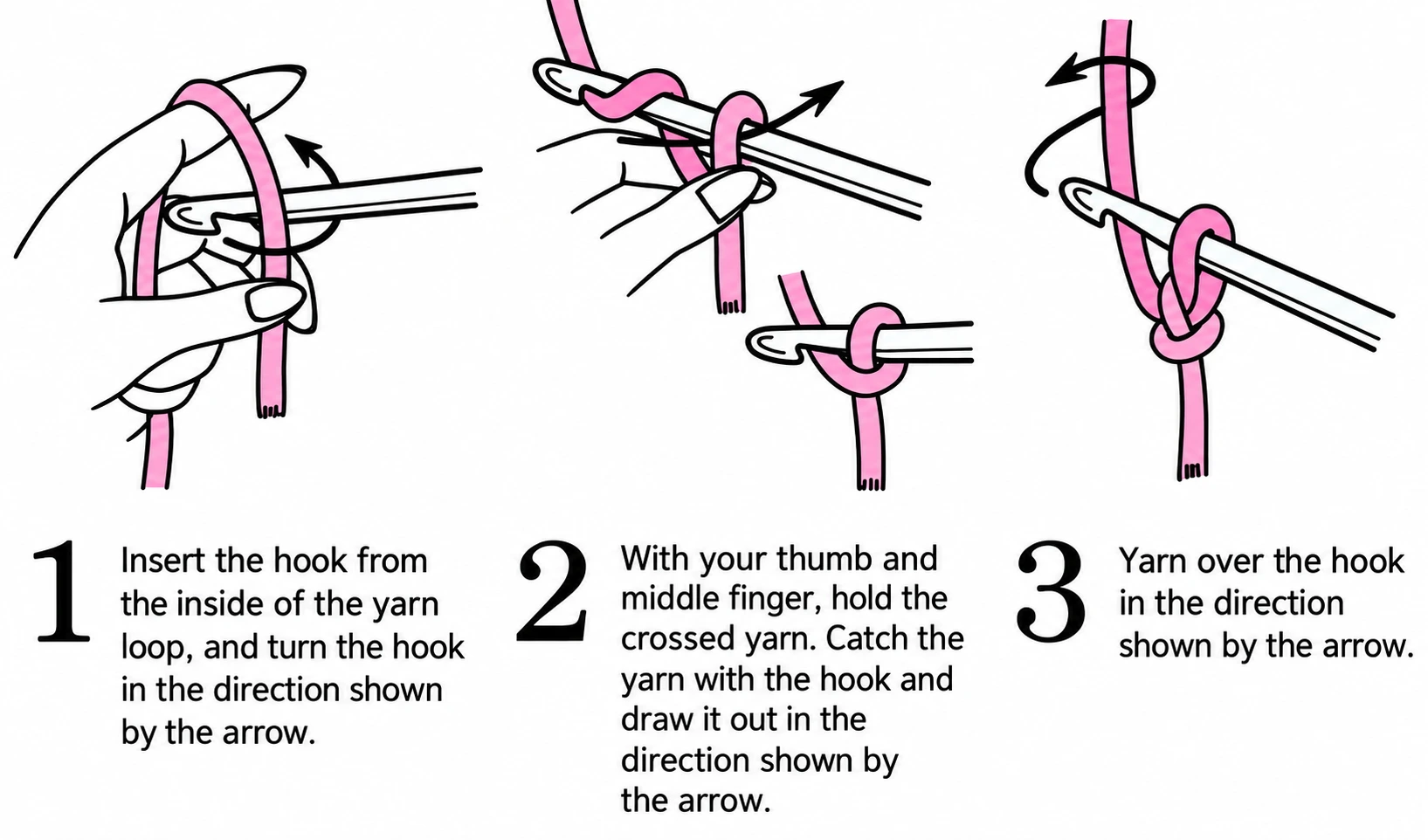
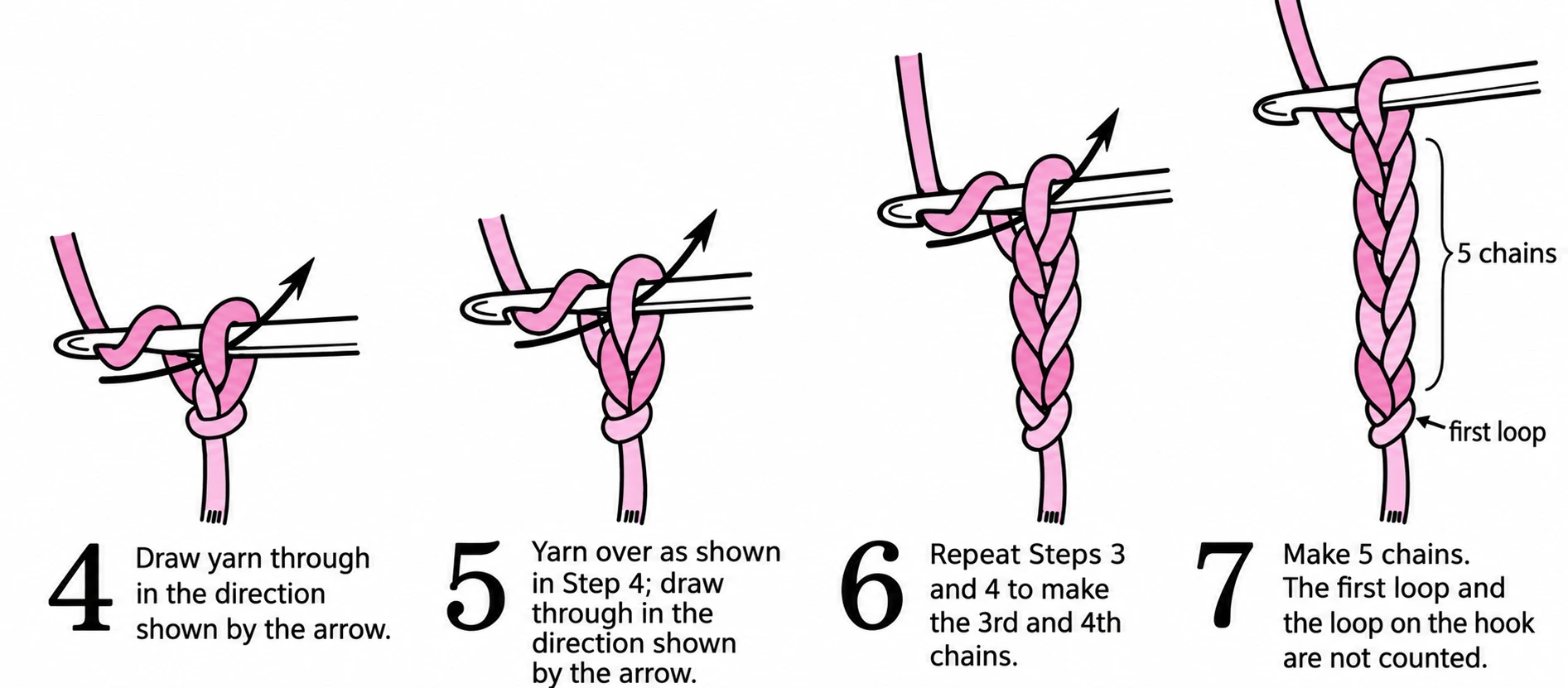
Count the completed V shapes, leaving out the slip knot and the working loop. A chain has a front V and a separate bump on its reverse. A pattern may tell you which part to use when working the first row.
02. Slip stitch — sl st / SL
Insert the hook into the specified stitch or space. Yarn over and pull through the insertion point and the loop on your hook in one movement.
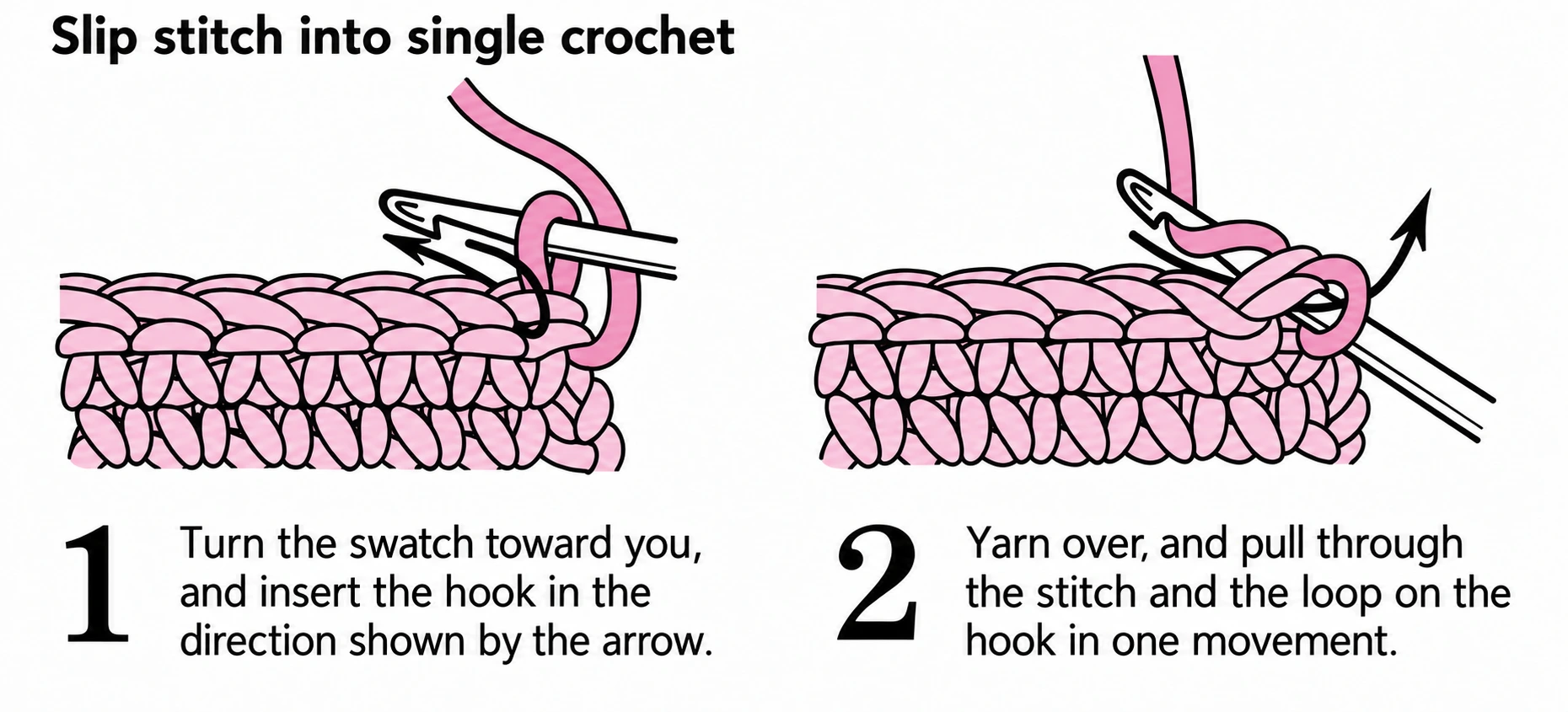
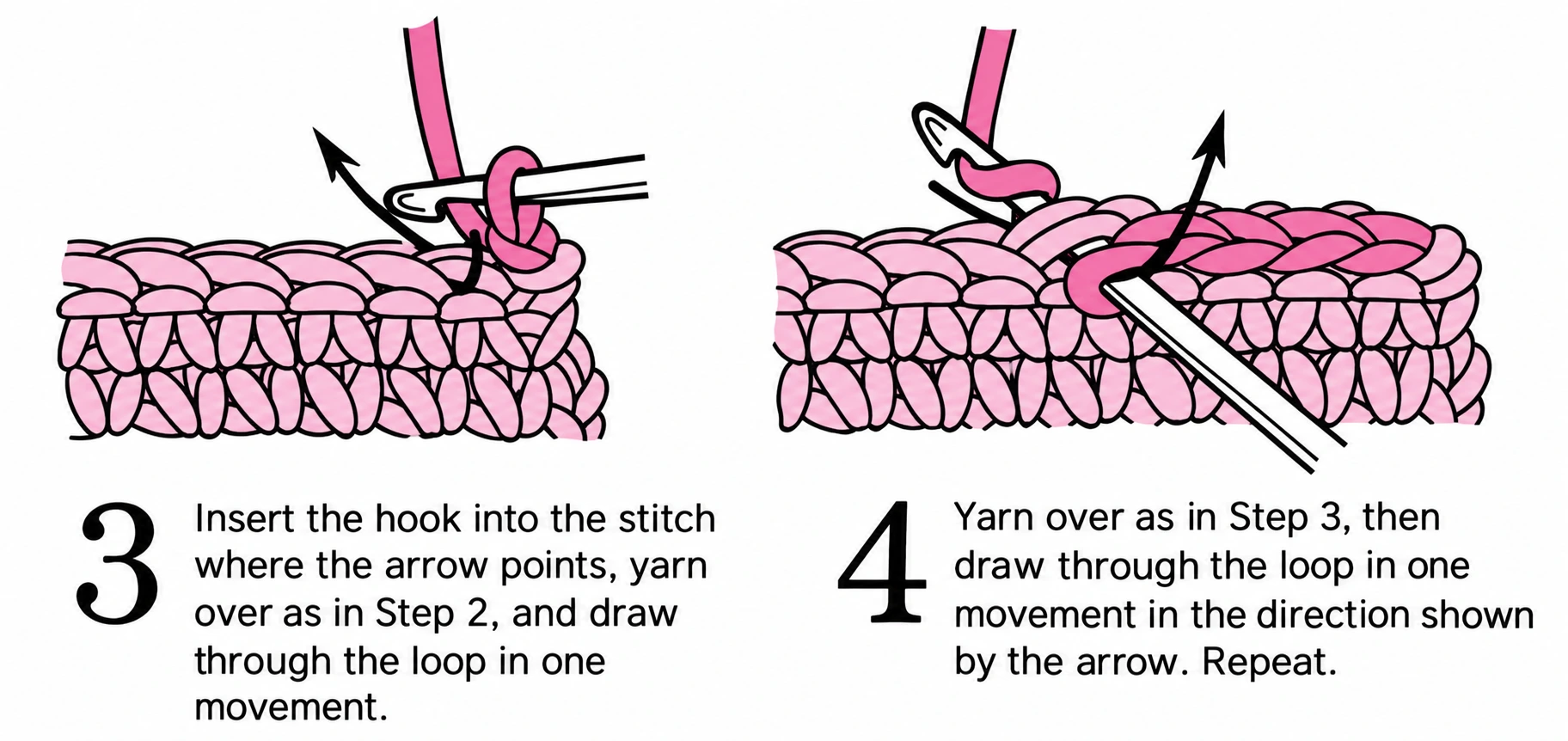
Slip stitches are useful for joining, moving along an edge or creating a low-profile finish. Keep them relaxed; an excessively tight slip stitch can be difficult to work into later.
03. Single crochet — sc / X
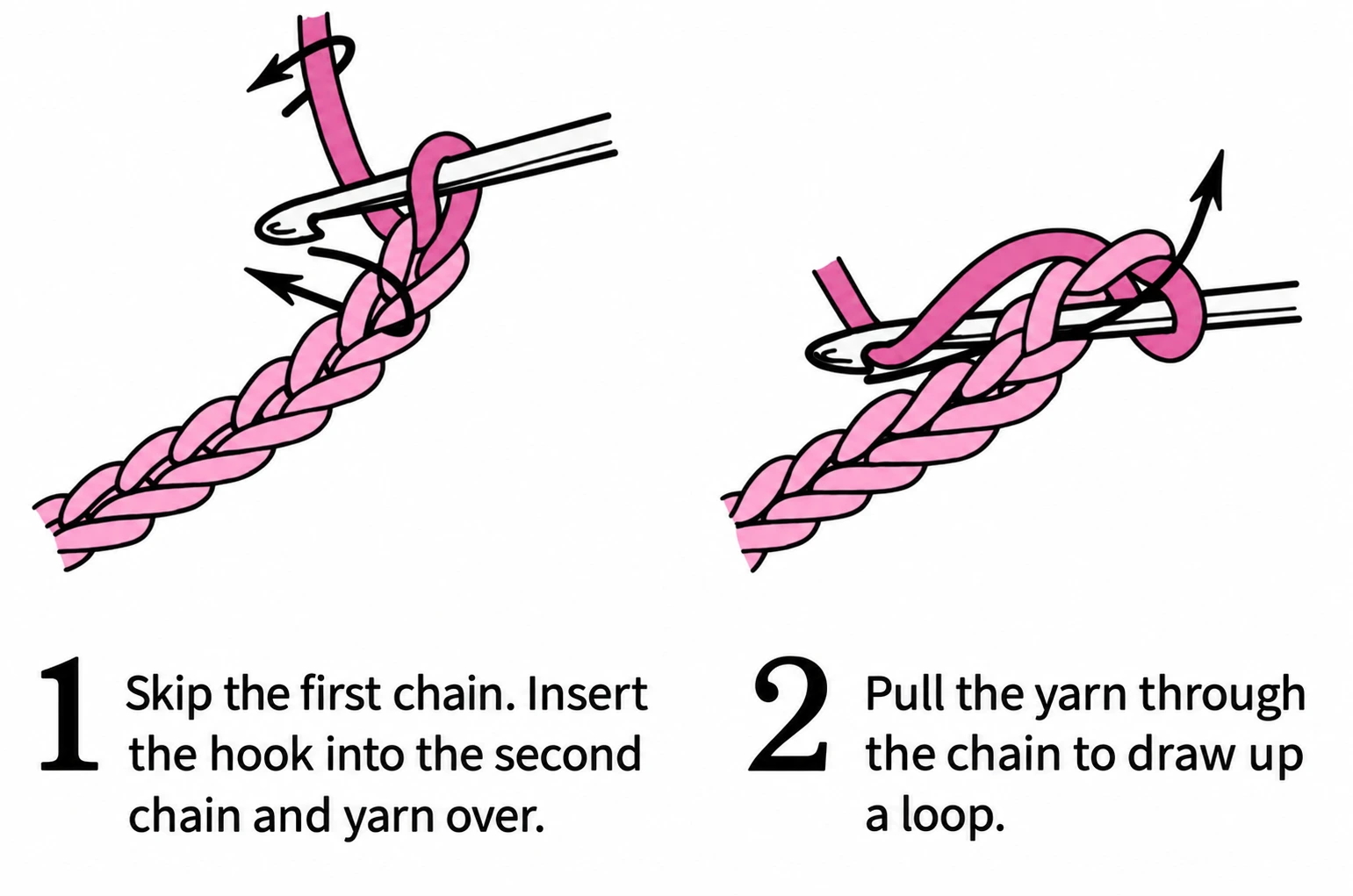
- Insert the hook into the specified stitch.
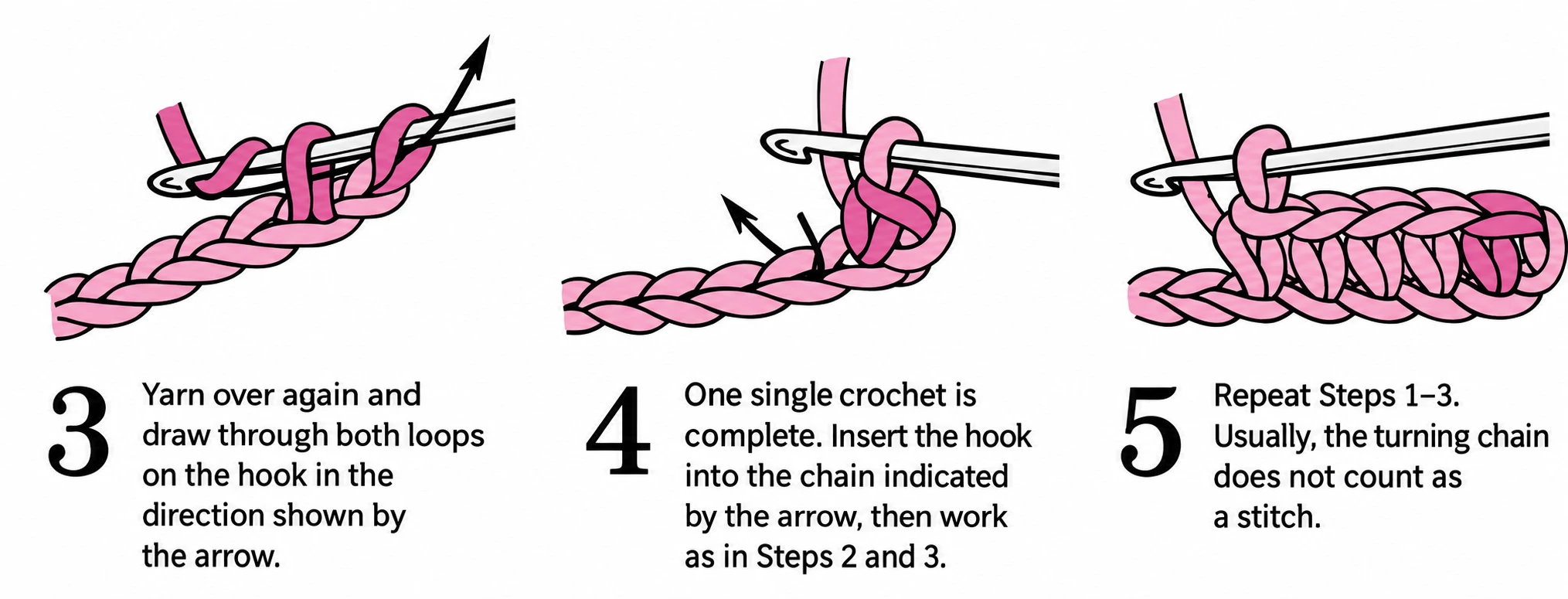
- Yarn over and draw up a loop. You now have two loops.
- Yarn over again and pull through both loops.
One loop remains on the hook. When practising into a foundation chain, begin in the second chain from the hook unless your pattern gives a different setup.
04. Half double crochet — hdc / T
Yarn over before inserting the hook. Insert it, yarn over and draw up a loop. Three loops are now on the hook. Yarn over and pull through all three in one movement.
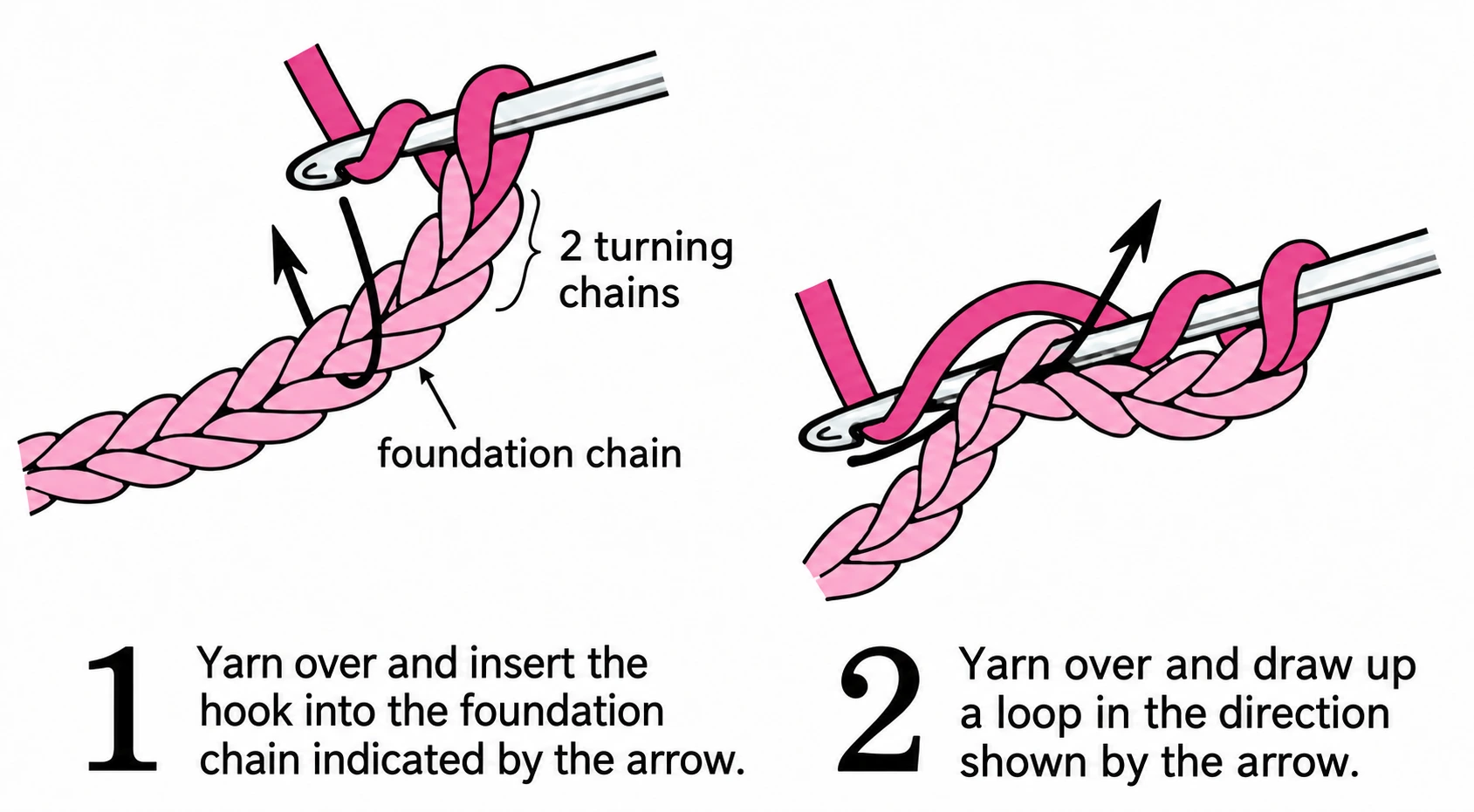
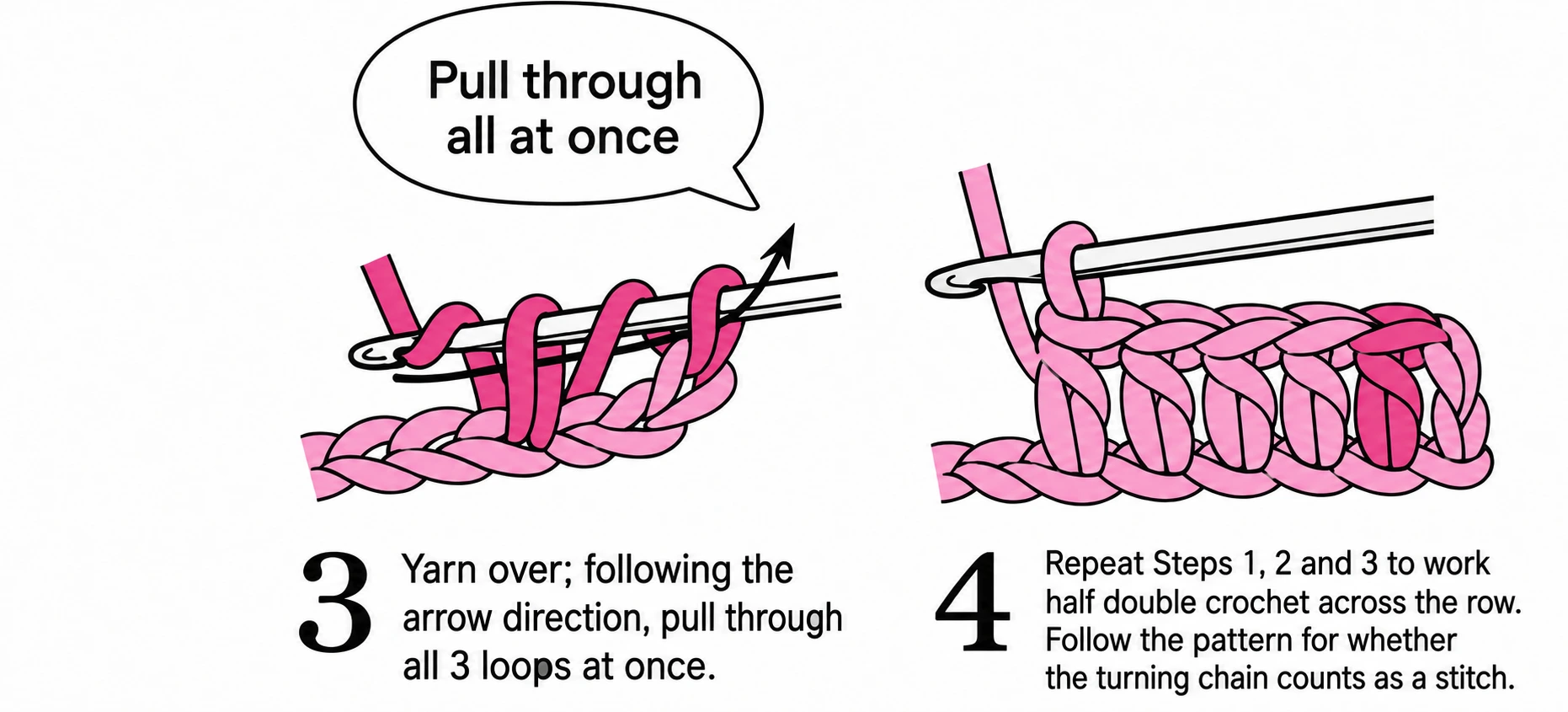
Keep the initial yarn over on the shaft until you draw through the loops. Accidentally dropping it changes the stitch. Half double crochet also has an additional bar below its top V; use that bar only when the pattern asks for it.
05. Double crochet — dc / F
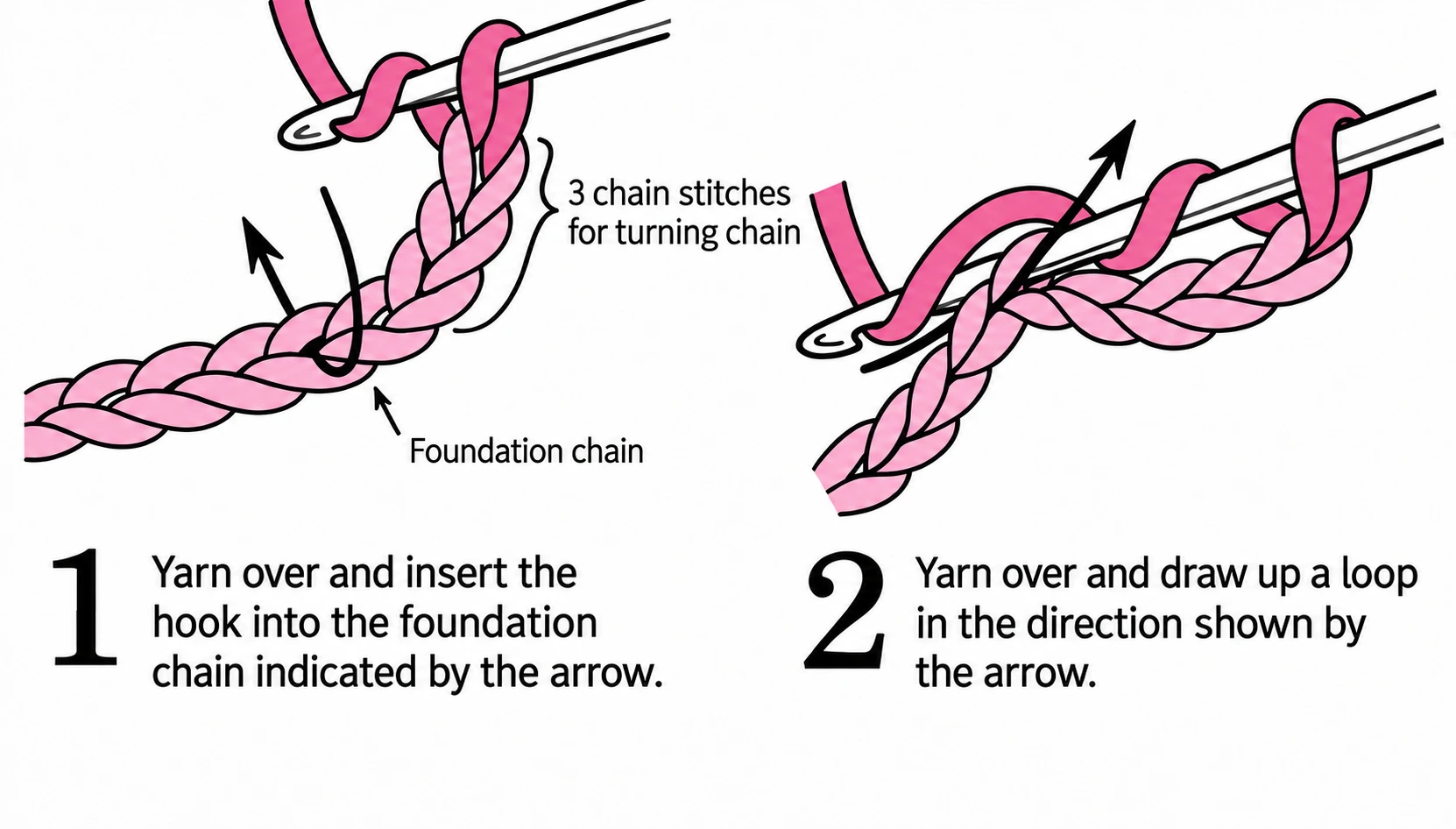
- Yarn over, insert the hook, yarn over and draw up a loop.
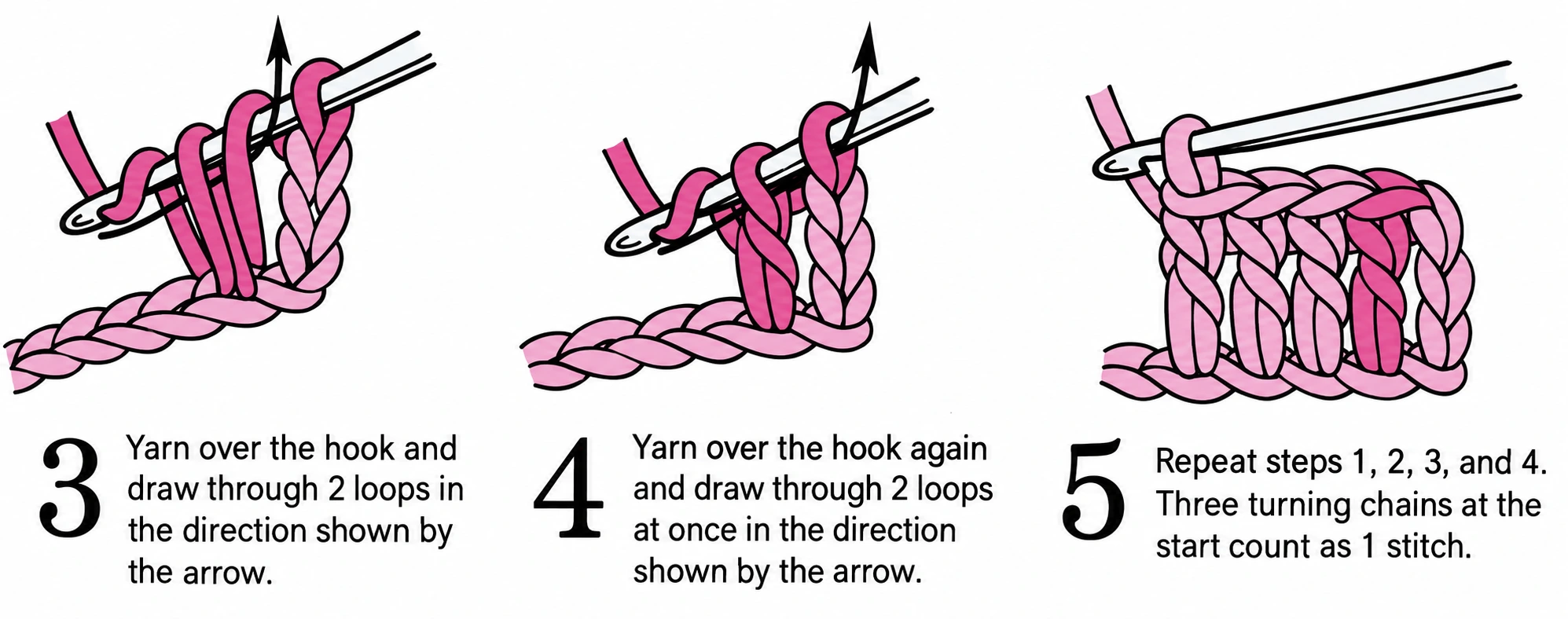
- Yarn over and pull through two loops.
- Yarn over and pull through the remaining two loops.
The two separate draw-through movements create a taller stitch. Avoid pulling the first loop much higher than its neighbours, or the row may look uneven.
06. Treble crochet — tr / E
Yarn over twice before inserting the hook. Yarn over and draw up a loop; there are now four loops on the hook. Yarn over and pull through two loops three times, until only the working loop remains.
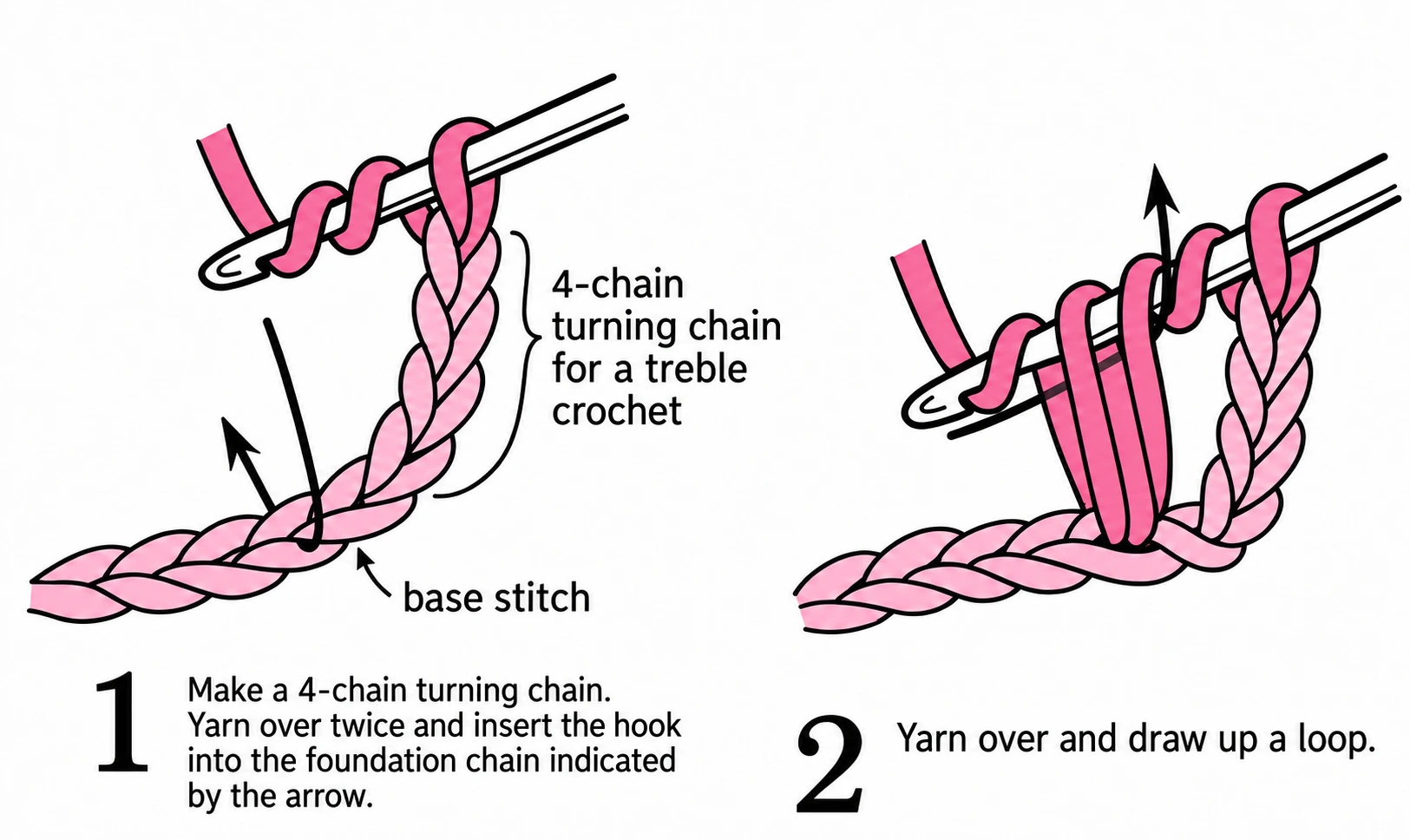

The taller post gives more height and openness. The reference also shows stitches with three or four initial yarn overs. Treat these as later extensions of the same draw-through-two principle, with their own pattern instructions.
Compare the movements
| US stitch | Yarn overs before insertion | How to finish after drawing up a loop |
|---|---|---|
| sc | 0 | Through 2 loops |
| hdc | 1 | Through all 3 loops |
| dc | 1 | Through 2, then 2 |
| tr | 2 | Through 2, then 2, then 2 |
A small exercise
Chain 11. Work one single crochet into the second chain and each remaining chain: ten stitches. Chain one, turn, and work ten single crochets across. Repeat a few rows, counting after each row. This exercise treats the turning chain as height only, not as a stitch.
For taller-stitch samples, follow a practice pattern that states whether its turning chain counts. The starting-chain setup is not identical in every tutorial.
Reference notes
Adapted from the chain, slip-stitch and basic-stitch pages of the supplied I Want to Learn Crochet (Chinese-language reference). Illustrations show stitch structure; the written instructions describe the working movements.
Step illustrations and photographs are excerpts from the supplied reference materials credited below. In-image instructional text has been translated into English and the supplied images enhanced with AI assistance. The English captions explain the pictured actions. Select a step image to view it at full size.
Frequently asked questions
Which crochet stitch should a beginner learn first?
Start with chain and single crochet. They teach the basic yarn-over, insertion, pull-through and counting movements before you add taller stitches.
What is the difference between US and UK crochet terms?
Some stitch names shift between systems. Check the pattern’s stated system before following a written instruction, especially for single and double crochet.