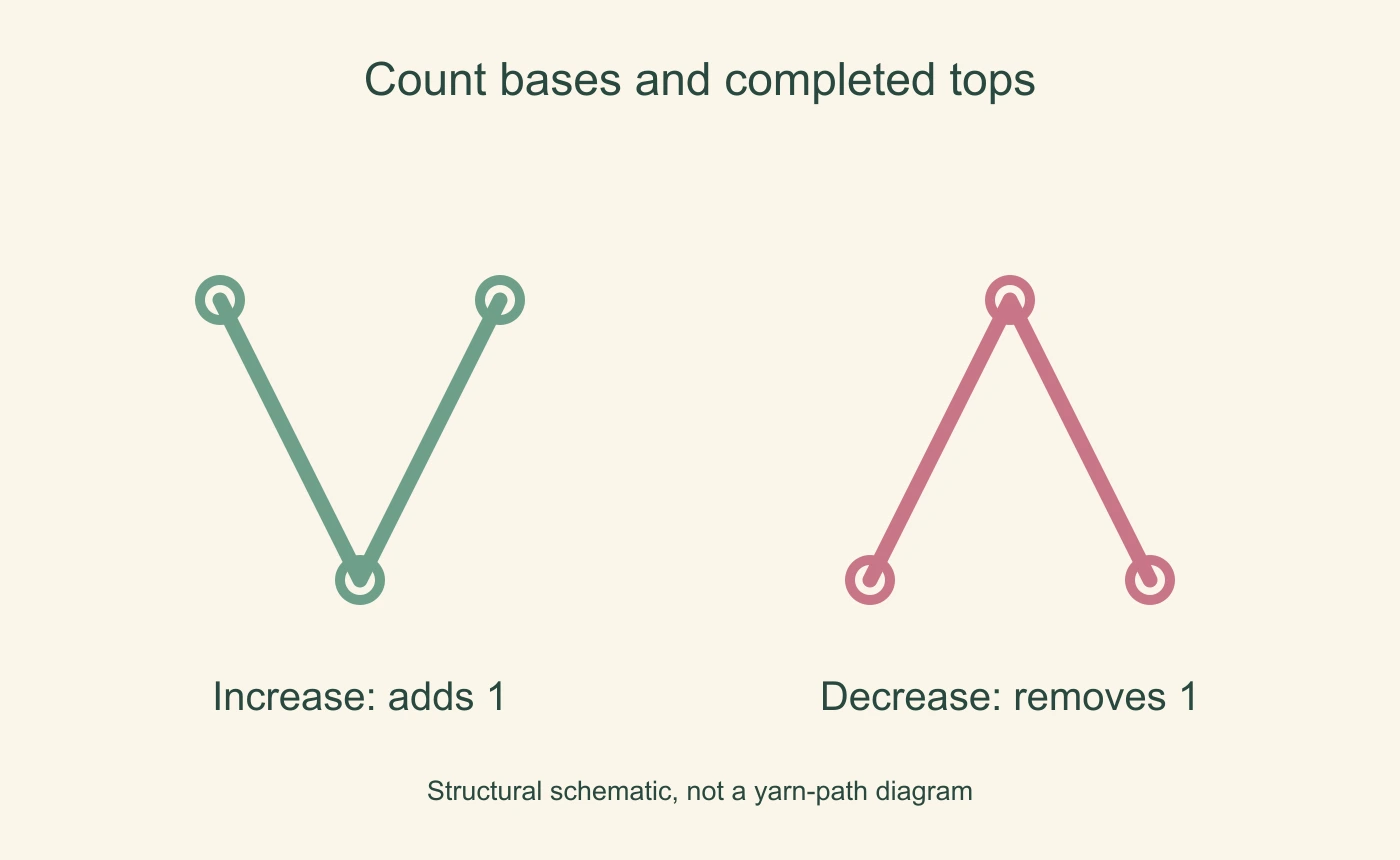
Increases add width or circumference. Decreases remove it. Together they shape rounded heads, leaves, petals and clothing pieces. The useful habit is to track how many old stitches an instruction uses and how many new tops it produces.
In this guide
One stitch becomes two / Two stitches become one / The same principle applies to taller stitches / Check a repeat before crocheting it / Put shaping where the pattern needs it / When the count is wrong
One stitch becomes two
For a single-crochet increase, complete one single crochet in the next stitch, then complete another in exactly the same stitch. One base stitch produces two new stitches, so the total grows by one.
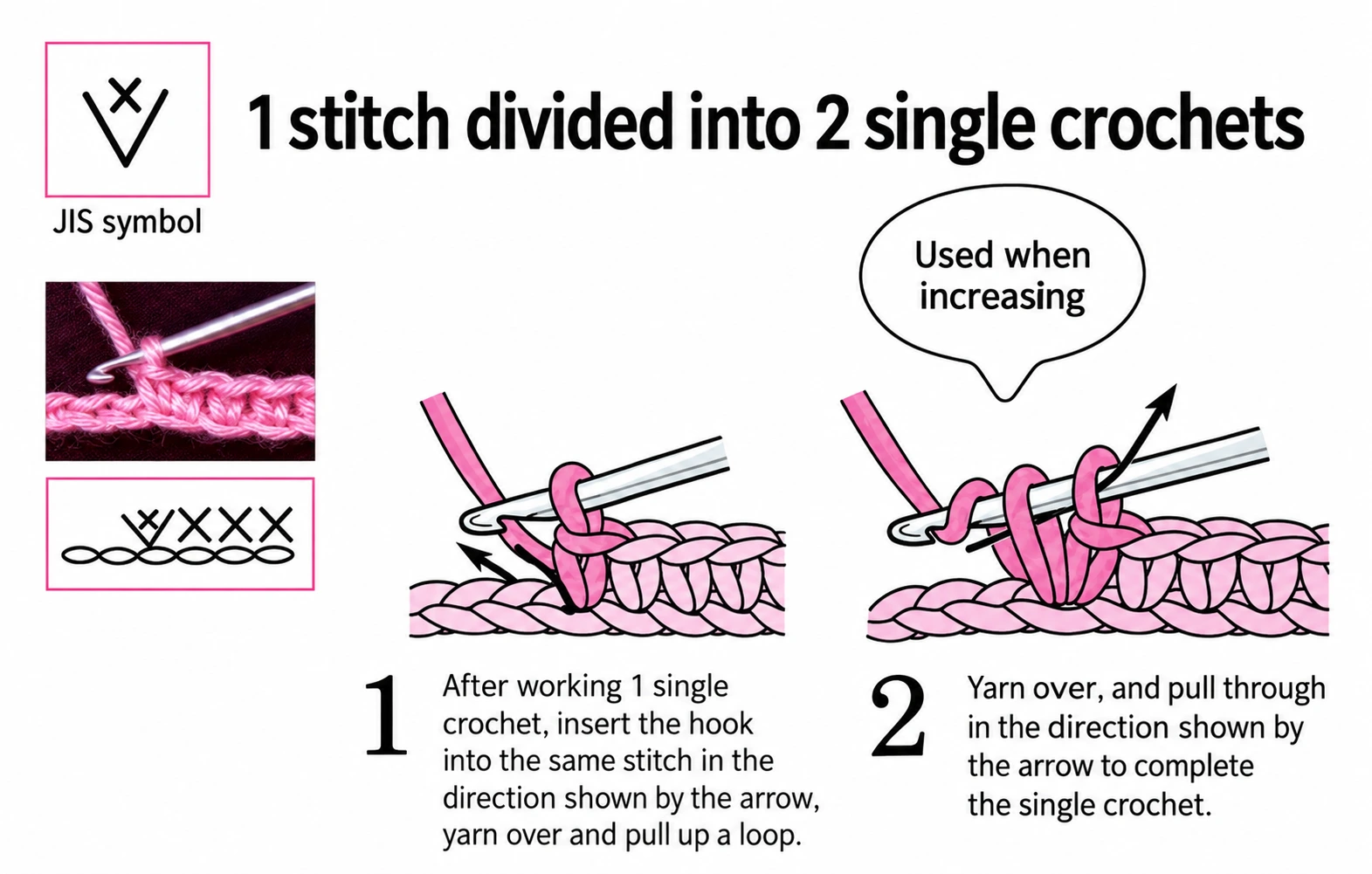
The reference letter V describes this operation. W makes three single crochets in one stitch, adding two to the total. Do not read “two stitches in one” as an increase of two; one stitch would already have been there.
Two stitches become one
To work a regular sc2tog, insert the hook into the first stitch, yarn over and draw up a loop. Repeat in the next stitch. With three loops on the hook, yarn over and draw through all three. Two base stitches now share one top.
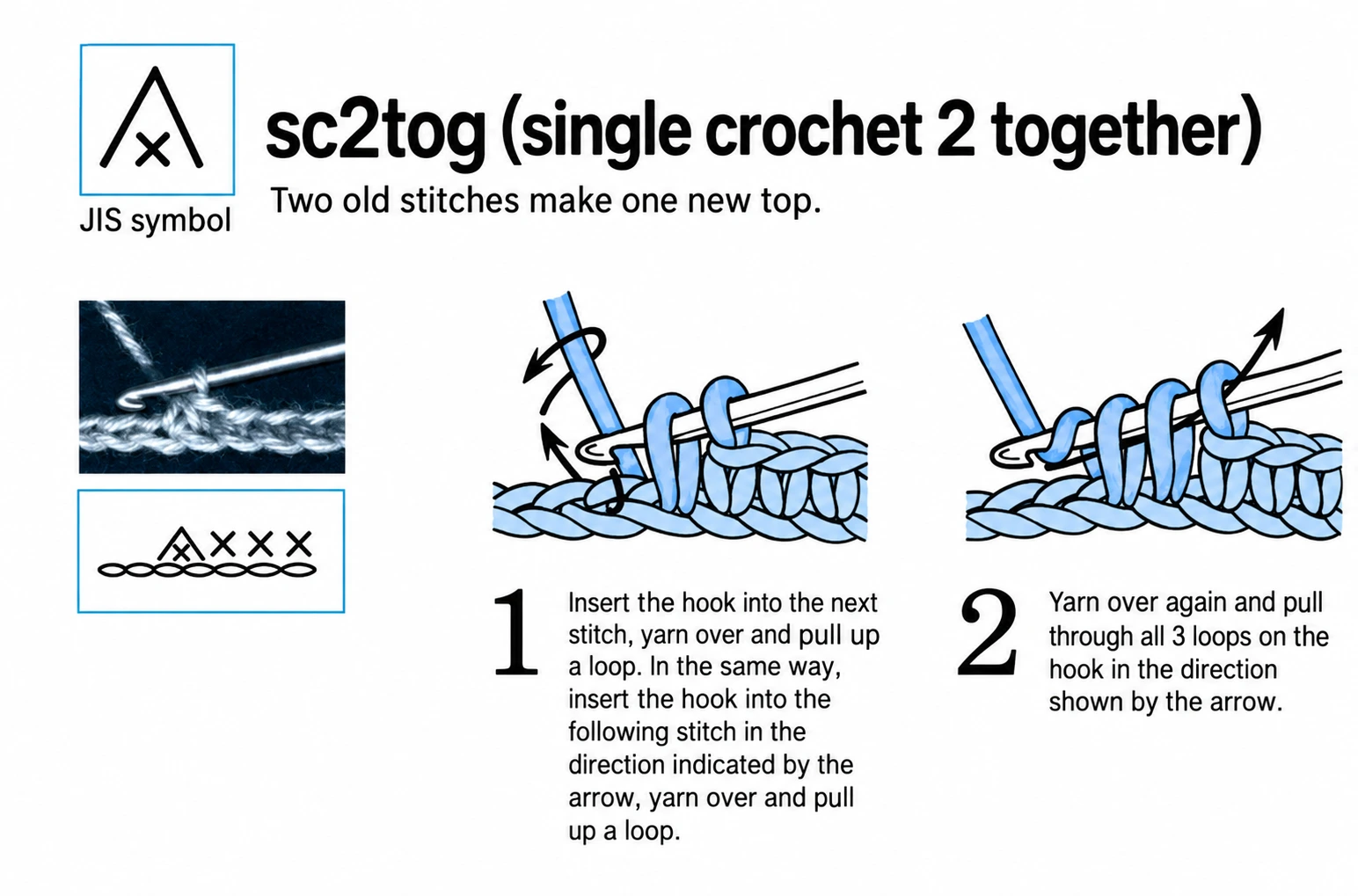
For sc3tog, draw up a loop in each of three stitches before completing the decrease through the four loops on the hook. This removes two stitches from the total. The reference letters A and M represent these two operations.
The same principle applies to taller stitches
| Stitch family | Two in one base | Two together |
|---|---|---|
| Single crochet | 2 sc in next st | sc2tog |
| Half double crochet | 2 hdc in next st | hdc2tog |
| Double crochet | 2 dc in next st | dc2tog |
| Treble crochet | 2 tr in next st | tr2tog |
For a double-crochet decrease, begin a double crochet in the first base but leave its last draw-through unfinished. Do the same in the second base, then yarn over and pull through the three remaining loops. Both unfinished stitches close together.
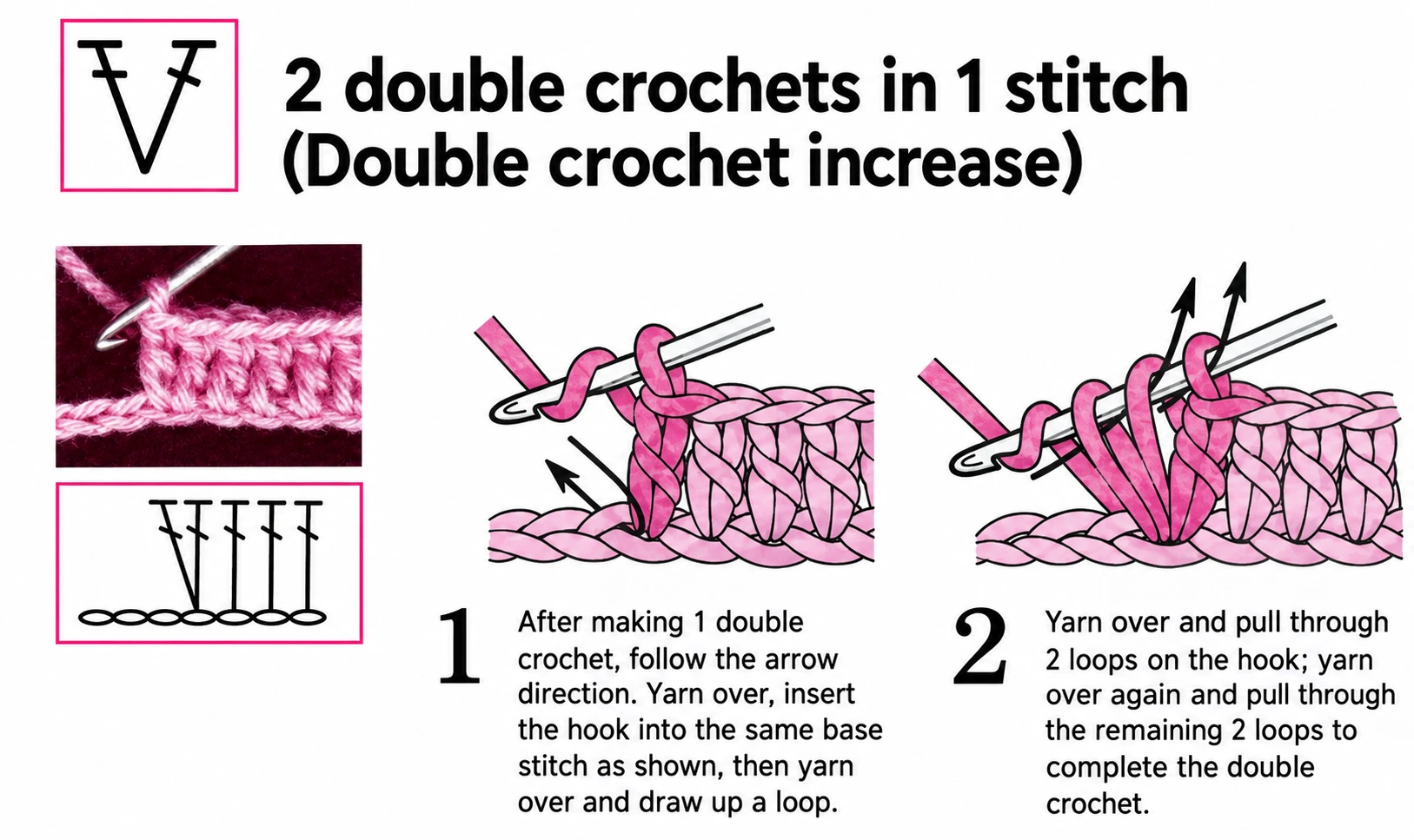
A group of unfinished stitches worked in the same base can make a raised cluster instead. It may look similar at the top, but it does not consume several neighbouring base stitches in the same way.
Check a repeat before crocheting it
Suppose a round has 18 stitches and says “(2 sc, inc) six times.” Each repeat uses three old stitches: two for the ordinary stitches and one for the increase. It creates four new stitches. Six repeats therefore use all 18 old stitches and produce 24 new ones.
Now take 24 stitches and work “(2 sc, sc2tog) six times.” Each repeat uses four old stitches and creates three new stitches. The result is 18.
These examples illustrate the arithmetic, not a complete doll pattern. Use the shaping schedule belonging to the project you are making.
Put shaping where the pattern needs it
The reference shows increases and decreases at the beginning, middle and end of rows. Their position matters: repeated changes at the same edge can create a slope, while changes around a round affect its outline.
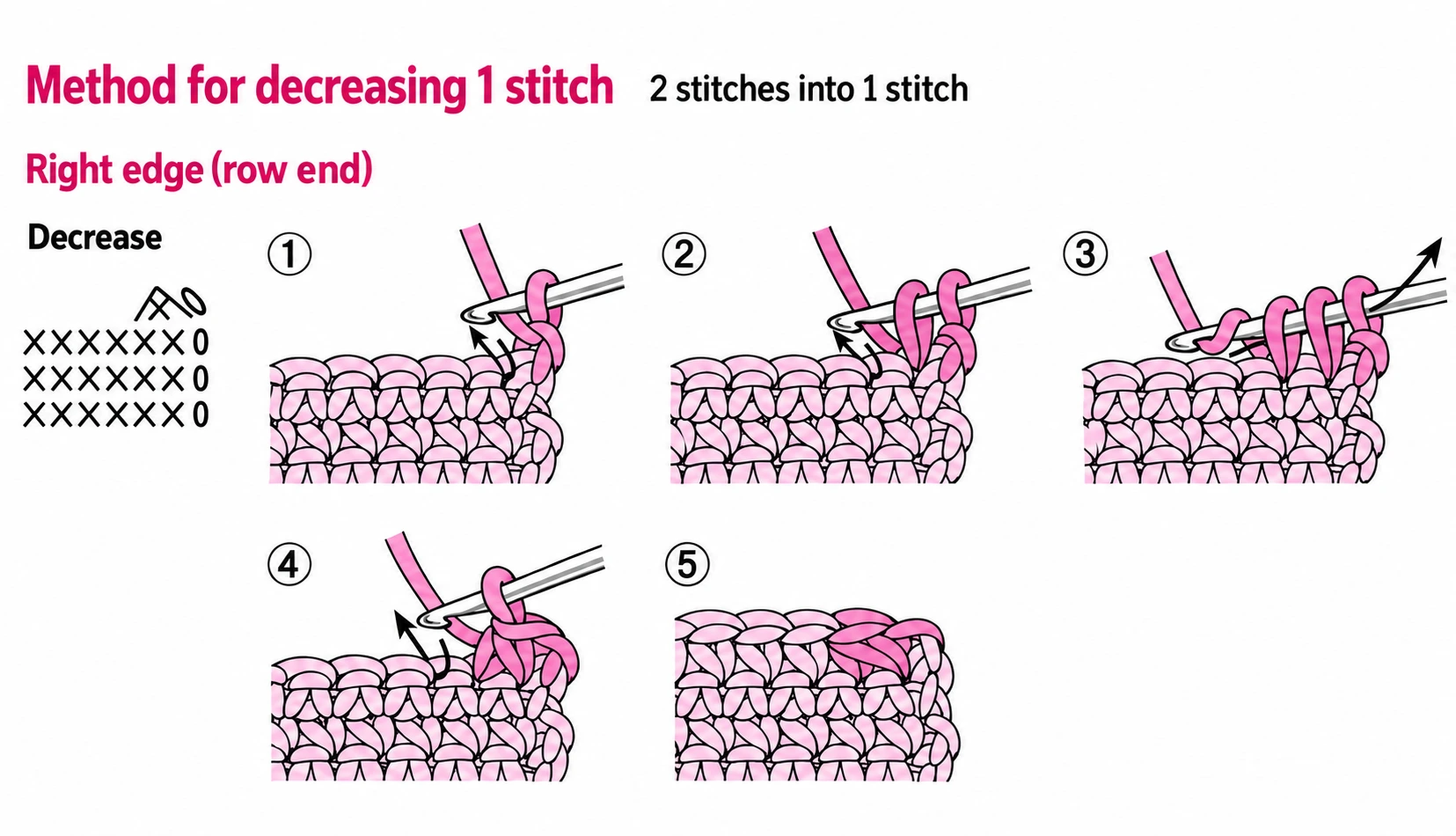
Do not move increases just to make the instruction easier to remember. A leaf tip or shaped head may depend on their placement. Use extra markers to separate repeats when a round is difficult to track.
When the count is wrong
- Recount from the start marker.
- Check whether an increase used the same base twice.
- Check whether the decrease consumed the intended number of bases.
- Look for an accidentally counted turning chain or joining slip stitch.
- Correct the error before stuffing or attaching another piece.
Reference notes
Adapted from the increase and decrease sections of the supplied I Want to Learn Crochet (Chinese-language reference) and its accompanying letter charts. The counting examples are written for this guide.
Step illustrations and photographs are excerpts from the supplied reference materials credited below. In-image instructional text has been translated into English and the supplied images enhanced with AI assistance. The English captions explain the pictured actions. Select a step image to view it at full size.